Climate risk tops data confidence concerns for UK businesses
Only a third of business leaders use environmental data to inform major decisions
Press Office
Yet despite the growing importance of climate resilience, just a third (33%) of organisations use environmental or climate data to inform major strategic or investment decisions.
The research, which surveyed over 250 senior leaders across the UK's utilities, telecoms and financial services sectors, also reveals that 17% lack confidence in having the right information to support climate risk decisions - the lowest level of data confidence across any decision area tested, compared to just 8% for regulatory compliance and 6% for infrastructure investment.
The climate data blind spot
The confidence gap is particularly pronounced in sectors responsible for critical national infrastructure, with one in five utility firms (20%) not being confident that they have the right data to plan for climate risk, alongside 19% of telecoms businesses and 12% of financial services firms.
The research also reveals a disconnect between the boardroom and those closer to delivery. While 88% of C-suite leaders are confident in the data supporting climate risk planning, this drops to 76% among senior management, suggesting those responsible for putting decisions into practice may have greater concerns about the information available.
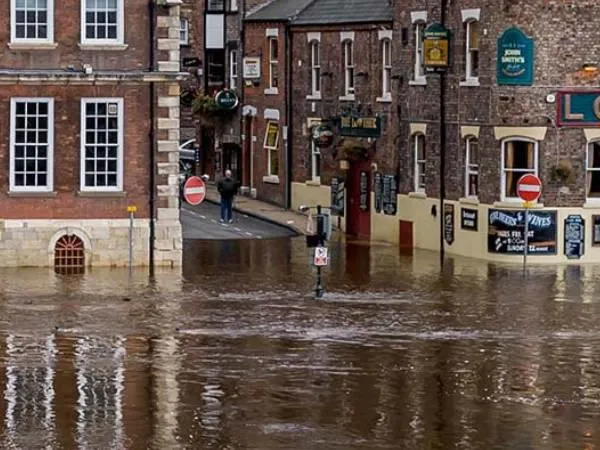
Environmental or climate data also ranks just sixth out of nine data sources typically used by organisations to inform major decisions, behind financial market data, internal operational data, AI-generated insights, partner data and scenario modelling.
Putting location at the heart of climate resilience
The findings come as businesses face growing pressure to build resilience and account for future risks, with more than a third (34%) saying ‘external risks’ including climate change, regulation and economic uncertainty have made strategic decisions more difficult over the past five years.
For organisations making long-term decisions about infrastructure, assets and investment, this risks leaving a significant blind spot in their ability to anticipate and respond to future environmental threats.
"Climate change is fundamentally reshaping the decisions businesses need to make about their future. This year alone, we’ve seen winter storms bring flooding and power cuts, the hottest summer on record leave around 45 million people living in drought-affected areas, and more wildfires in England and Wales by mid-August than in the whole of 2025. In a changing world, businesses can’t afford to make decisions about infrastructure that needs to last for decades without a complete picture of the risks. Without that insight, organisations risk investing in the wrong places, overlooking vulnerabilities and facing costly delays further down the line. This is where location intelligence becomes critical."
He added:
"Climate risks don't exist in isolation – they affect real assets, networks and communities in specific places. By combining trusted location data with environmental intelligence, organisations can better understand their exposure, identify vulnerabilities and plan with greater certainty. After all, knowing what the risks are is only half the challenge. Knowing where they will have the greatest impact is what enables businesses to act with confidence."
As Great Britain's national mapping service, OS provides trusted, authoritative location data that helps businesses connect complex datasets and make more informed decisions about critical infrastructure, environmental resilience and long-term investment.
These findings form part of OS's Building Decision Confidence Report, which examines the growing importance of reliable, high-quality data in supporting strategic decision-making across the UK's utilities, telecoms and financial services sectors.
You can download the full report here: Building Decision Confidence.
Sharing the latest news about OS. We can license you to use OS maps in print, online and film format. For more information and resources for journalists, bloggers and media professionals, email pressoffice@os.uk or call 023 8005 5565.