How Ordnance Survey will be supporting the new Land Use Framework for England
Working with partners in government to put geospatial data in the hands of those who need it
Trusted and authoritative data is a fundamental tool for understanding how land use and land cover change over time, informing organisations and individuals to make decisions using the new framework. Ordnance Survey (OS), as providers of foundational national geospatial data, along with other partners, will work with Defra over the next 12 months to understand user needs when increasing access to richer land data, and to test options for improving data accessibility and interoperability for decision-making.
OS is working in partnership with HM Land Registry and welcomes its initiative to provide access to free at the point of use, spatial land ownership data covering the vast majority of England and Wales. This is a key pillar to making land use information digital. The framework also states that Defra will improve the availability of foundational land datasets, including through the delivery of the government’s National Data Library (NDL). OS is already supporting the development of the NDL alongside the wider delivery of the roadmap for modern digital government.
"We are proud to support these cross-government initiatives led by Defra to make information on land use digital and improve the accessibility of crucial decision-making datasets. We are working with partners in government to put foundational national geospatial data in the hands of the people who need it to make smarter, more informed decisions about land use."
OS as the largest holder of spatial data on land use
OS is one of the largest holders of spatial data on land use and provides up to 30,000 updates to its database every day. The OS National Geographic Database (OS NGD) themes include Land, Building, Land Use, Structure, Transport, and Water and contain land information data which can also be seen in the OS MasterMap Topography and Sites products. The data in the OS NGD has been structured to be more analytical and consistent across the OS NGD themes, allowing easier selection of the required features and delivering greater value to users. In the last year, OS has also released a new beta product, Enhanced Land Cover, which provides enhanced ecology mapping using UK habitat classifications.
OS has a history of contributing to land use data and land cover standards over several years. These datasets are published with metadata that complies with the UKGEMINI metadata standard. The adoption of common standards contributes to data sources used in the management of land being more findable, accessible, interoperable and reusable.
OS data is readily accessible through the OS Data Hub, which supports thousands of individuals and organisations across the public and private sectors. It provides access to OS data through a variety of licensing terms including open data and through a suite of standardised geospatial APIs and data downloads which can be integrated into users’ apps and solutions. OS is constantly looking to provide a greater and richer variety of data to customers and has included third party datasets from the British Geological Survey – the leading provider of the UK’s scientific earth data – which has extended the offering to OS customers significantly.
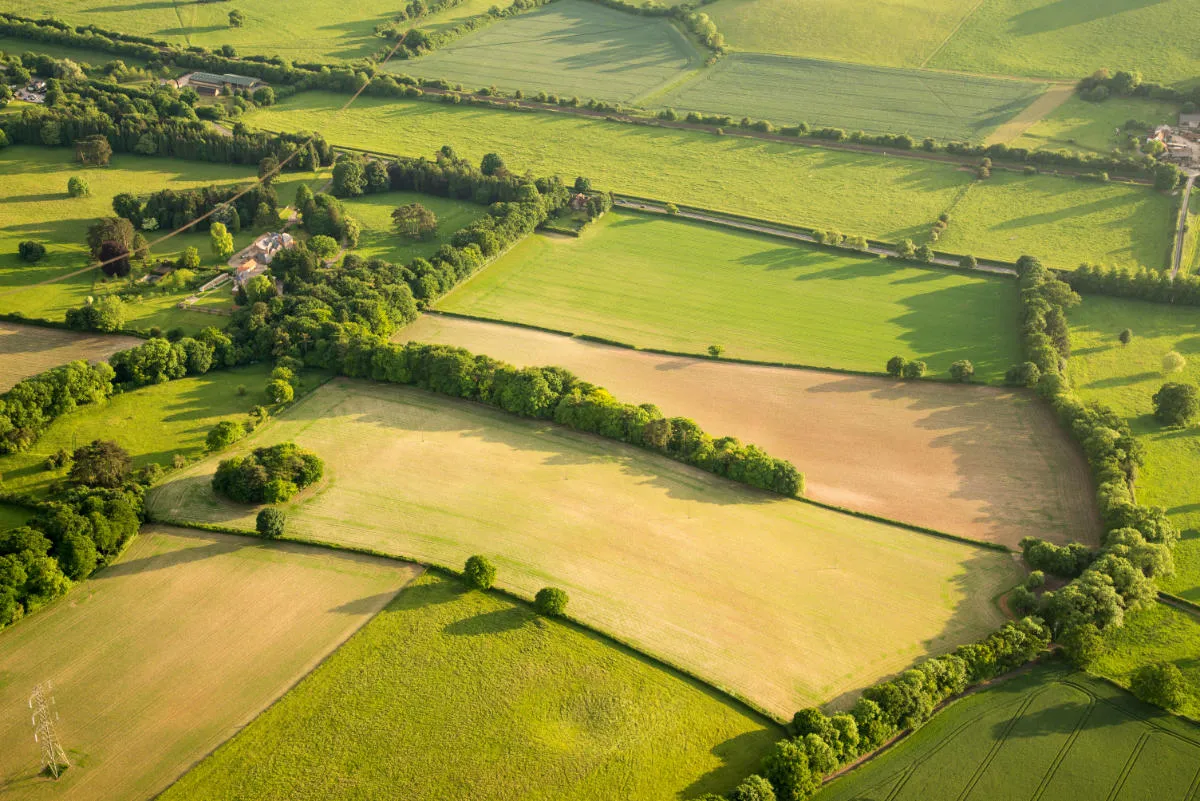
OS Land Use data is widely used by central, devolved and local government bodies and agencies such as the Environment Agency and Rural Payments Agency in England. One local government example is the Greater Manchester Ecology Unit, which has been leading the mapping work for the Greater Manchester Combined Authority’s Local Nature Recovery Strategy. The unit found that the best way of mapping and identifying current land use and land cover was by using the OS NGD products, selecting ‘recipes’ or layers of mapping data as they need. A key benefit was the provision of a consistent hierarchical classification for land use and land cover across the OS NGD features that makes selection and identification of areas of interest and the calculation of statistics much simpler than it was before.
Paul Barrington, Biodiversity Systems Manager for the GMEU said:
"Using OS data has saved the project so much time – it really has been a game-changer. The various feature sets have enabled us to estimate land use percentages so we can see how much is made up of agriculture, buildings or residential gardens and driveways. OS data is also helping us identify which groups of stakeholders and land managers have the most influence and who we need to be engaged with to assist with that nature recovery. I couldn’t have done this without NGD data. It has saved me – and the ecologists we would have needed out on the ground – so much time."
OS data is free at the point of use to public sector customers under the Public Sector Geospatial Agreement (PSGA). This is a contract between Government Digital Service, managed on behalf of the UK Government, and OS for the provision of geospatial data and services to the emergency services and wider public sector organisations. OS data is also available to commercial partners under licensing agreements.
If you would like to contact OS, please email psga@os.uk
Explore the OS National Geographic Database
A single store of our authoritative data for Great Britain
Our highly accurate geospatial data and printed maps help individuals, governments and companies to understand the world, both in Britain and overseas.
Products and solutions featured in this blog
OS Land Features
Explore detailed land cover data, and visualise the land cover make-up of Great Britain, including both manmade features and natural land features.
OS Land Use Features
Visualise and analyse geometric representations of different types of land use, land use sites, and site access data.
OS Enhanced Land Cover (Beta)
An aggregate of OS data, third-party land cover, and ecological datasets to assess and monitor land cover of the natural habitats within England.
Find more blog articles
- Land and property